All About Retinoid X Receptors (RXR)
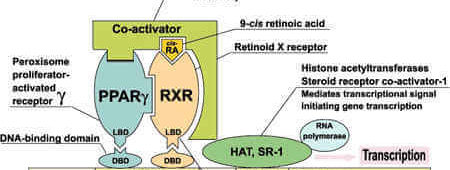
Retinoid X receptors (RXRs) are vitamin A receptors that often partner with other important receptors, including retinoic acid receptors, vitamin D receptors, thyroid hormone receptors, and PPARs.
Therefore, these have critical roles in energy production (obesity, blood sugar, cholesterol), anti-inflammation, preventing leaky gut, skin health, and cancer prevention.
Could low vitamin A or low RXR activation contribute to your health problems? Read this post to learn more.
What Is a Retinoid X Receptor?
The retinoid X receptor (RXR) is a vitamin A receptor that often partners with other important receptors inside the cells. As a result, it has several important roles in energy production, immune responses, development and skin health.
Types of Retinoid X Receptors
There are three main sub-types of retinoid X receptors: RXR-α, RXR-β, and RXR-γ.
- RXR-α is found in the liver, lung, muscles, skin, kidney, and intestines
- RXR-β is found throughout the body
- RXR-γ is found in the brain, heart, and bone muscles [1]
Each RXR subtype is encoded by different genes and interacts with different biological pathways when activated [1].
Natural Activators of Retinoid X Receptors
RXRs Help with Immune System Function
Retinoid X Receptors (RXRs) are vital for the control of genes that are involved in the immune response [5].
1) Autoimmunity & Inflammation
Reduces Th1 and Increases Th2 Cells
Th1 and Th2 cell production influences the adaptive immune response. Th1 cells are mostly responsible for protecting against pathogens inside the cells. Meanwhile, Th2 cells protect against parasites that are located outside the cell [6].
The immune response’s outcome is controlled by changing the balance of Th1 and Th2 cells. RXR-α transmission normally suppresses the formation of Th1 cells and indirectly permits Th2 cell formation. Vitamin D receptors work with RXRs to inhibit Th1 and increase the Th2 response [6].
In a study of mice, scientists found that the RXR-α transmission pathway is necessary for Th2 responses. RXR-α deficiency decreases Th2 cell formation and causes Th1 cell levels to be too high [6].
Reduces Th17 and Increase Treg Cells
Th17 cell activation is linked to many autoimmune diseases, while Treg cells reduce autoimmunity. RXRs function with RARs to suppress Th17 cells. Activation of